
 Image 1 of 1
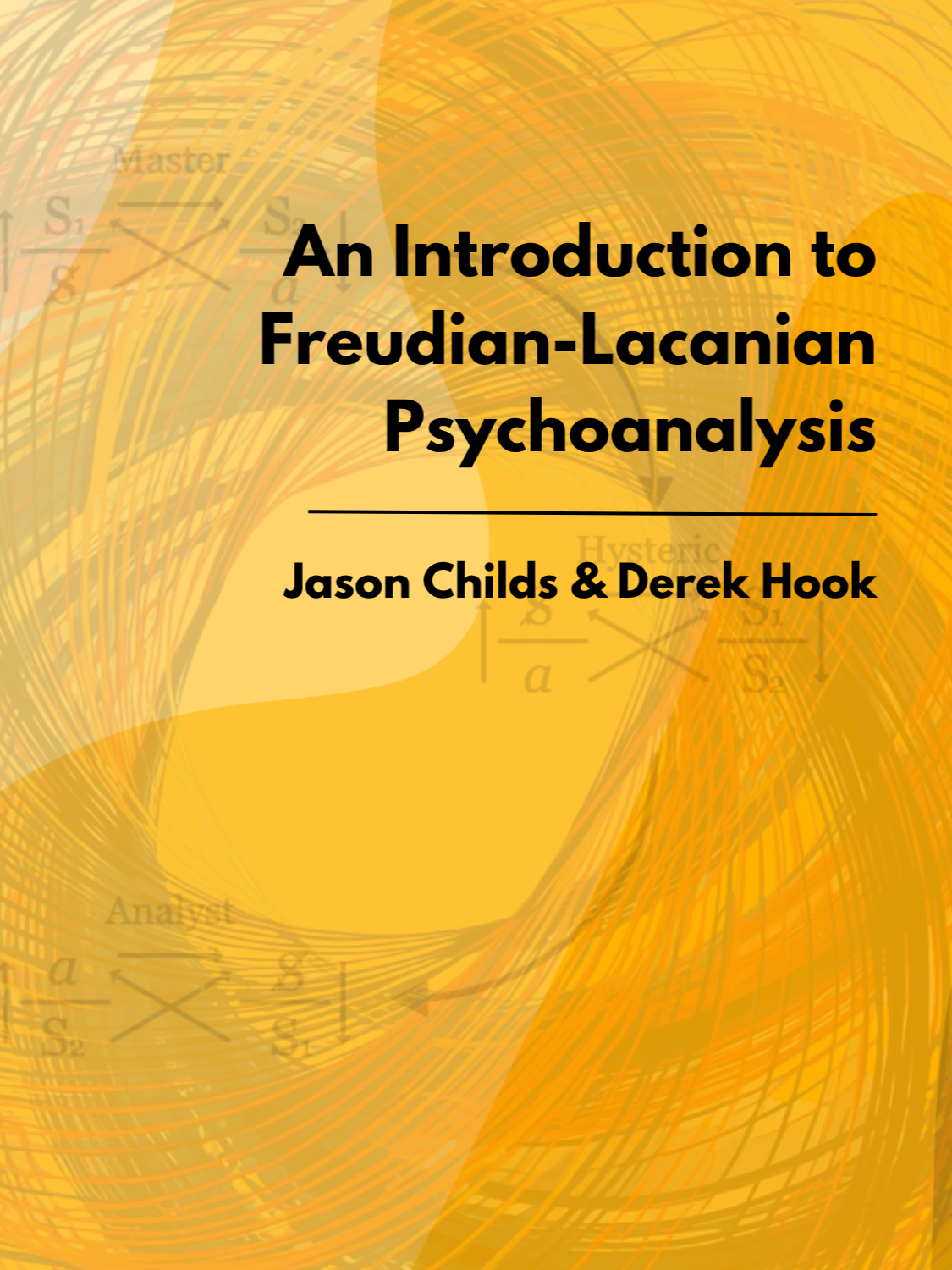
An Introduction to Freudian-Lacanian Psychoanalysis
What is psychoanalysis? This lecture course will set out to explore the answer provided to this question by the first psychoanalyst, Sigmund Freud; by the analyst many consider to be his most important and inventive interpreter, Jacques Lacan; and by the diverse group of thinkers and practitioners who have continued and expanded their project in recent decades.
Participants will receive a clear and lively introduction to core ideas in the Freudian-Lacanian tradition. We will explore both the historical context in which these ideas developed and their relevance today—in the clinic, in culture, in critical theory, and beyond. In addition to revisiting important moments in Freud’s and Lacan’s oeuvres, we will also explore works and ideas from some of the most influential Lacanians working today, such as Bruce Fink, Jacques-Alain Miler, Slavoj Zizek, and Alenka Zupancic.
This course will take place over eight 90-minute sessions, each including a lecture and open discussion:
The Freudian Unconscious
The Freudian Clinic
The Drives & Death Drive
Lacan’s Return to Freud
Symbolic, Imaginary, Real
Desire and Jouissance
The Lacanian Clinic: Analytic Ethics
The Lacanian Clinic: Diagnosis and Technique
Enrolment in this course is open to all. It will assume no prior knowledge, and will seek to accommodate both newcomers and those more familiar with psychoanalysis. It will be valuable to undergraduate and graduate level students engaged with psychosocial studies; to psychoanalytic candidates and therapy trainees who aim to develop their knowledge base; to professional clinicians who wish consolidate or expand their understanding of analysis; to analysands currently grappling with the unconscious; and to anyone else who wants to develop a deeper grasp of psychoanalysis.
Learning Objectives
By the end of the course, participants will be able to:
Explain central concepts in Freudian and Lacanian psychoanalysis, including the unconscious; the drives; the symbolic, imaginary, and real; and others.
Trace key developments in psychoanalytic theory from Freud to Lacan and understand their ongoing influence today.
Recognize how psychoanalytic ideas illuminate questions of culture, language, and subjectivity.
Engage critically with major interpreters and contemporary developments in the Freudian–Lacanian tradition.
Understand how psychoanalytic diagnostic structures shape clinical practice.
Practical Information
This course will run for 8 sessions / 90 mins per session.
This course will run on Saturdays at 7am LA / 10am New York / 3pm London / 4pm Paris.
Session dates: April 3, 10, 17, 24; May 1, 8, 15, 22.
This course will be delivered online via Zoom. Live attendance is strongly encouraged, but sessions will be recorded and available to participants who cannot attend.
Enrolment is open to all. Prior knowledge of psychoanalytic concepts and the relevant literature may be helpful, but is not required.
This course does not result in an official certification. However, a letter of acknowledgment signed by The Analytic Forum’s directors will be available upon completion of the course.
Instructors
Jason Childs is a Lacanian psychoanalyst based in France, working in private practice both locally and internationally. He began his career in academia, as a literary theorist, where he published work on the relationship between philosophy and literature. Childs trained as a psychotherapist at Deakin University in Melbourne, and undertook his analytic formation via studies at the Centre for Freudian Analysis and Research, the Lacan Circle of Australia, and other international Lacanian organisations. He has taught psychoanalysis at Pulsion Institute, the Global Centre for Advanced Studies, and the Blanton-Peale Institute. He is the author of two forthcoming books: On Not Fitting In: Rem(a)inders of Lacanian Psychoanalysis (Routledge 2026) and Drive: Theory and Clinic After Freud and Lacan (Palgrave 2026). He is co-director of The Analytic Forum
Derek Hook is a Professor of Psychology and a clinical supervisor at Duquesne University, Pittsburgh. A scholar and practitioner of psychoanalysis, he is one of the editors (along with Calum Neill) of the Palgrave Lacan Series and of the four-volume Reading Lacan's Ecrits (with Calum Neill and Stijn Vanheule). He began his analytical training in London, at the Center for Freudian Analysis and Research. He is the author of Six Moments in Lacan (2016), Fanon, Psychoanalysis and Decolonial Psychology (2025) and the co-editor of Lacan on Depression and Melancholia (2023), in addition to many papers on various facets of the clinical and cultural dimensions of Lacanian Psychoanalysis. He maintains a YouTube channel with many lectures on Lacanian psychoanalysis. He is co-director of The Analytic Forum.
Early Bird Discount available until December 31, 2026. Full price after this will be €199.
What is psychoanalysis? This lecture course will set out to explore the answer provided to this question by the first psychoanalyst, Sigmund Freud; by the analyst many consider to be his most important and inventive interpreter, Jacques Lacan; and by the diverse group of thinkers and practitioners who have continued and expanded their project in recent decades.
Participants will receive a clear and lively introduction to core ideas in the Freudian-Lacanian tradition. We will explore both the historical context in which these ideas developed and their relevance today—in the clinic, in culture, in critical theory, and beyond. In addition to revisiting important moments in Freud’s and Lacan’s oeuvres, we will also explore works and ideas from some of the most influential Lacanians working today, such as Bruce Fink, Jacques-Alain Miler, Slavoj Zizek, and Alenka Zupancic.
This course will take place over eight 90-minute sessions, each including a lecture and open discussion:
The Freudian Unconscious
The Freudian Clinic
The Drives & Death Drive
Lacan’s Return to Freud
Symbolic, Imaginary, Real
Desire and Jouissance
The Lacanian Clinic: Analytic Ethics
The Lacanian Clinic: Diagnosis and Technique
Enrolment in this course is open to all. It will assume no prior knowledge, and will seek to accommodate both newcomers and those more familiar with psychoanalysis. It will be valuable to undergraduate and graduate level students engaged with psychosocial studies; to psychoanalytic candidates and therapy trainees who aim to develop their knowledge base; to professional clinicians who wish consolidate or expand their understanding of analysis; to analysands currently grappling with the unconscious; and to anyone else who wants to develop a deeper grasp of psychoanalysis.
Learning Objectives
By the end of the course, participants will be able to:
Explain central concepts in Freudian and Lacanian psychoanalysis, including the unconscious; the drives; the symbolic, imaginary, and real; and others.
Trace key developments in psychoanalytic theory from Freud to Lacan and understand their ongoing influence today.
Recognize how psychoanalytic ideas illuminate questions of culture, language, and subjectivity.
Engage critically with major interpreters and contemporary developments in the Freudian–Lacanian tradition.
Understand how psychoanalytic diagnostic structures shape clinical practice.
Practical Information
This course will run for 8 sessions / 90 mins per session.
This course will run on Saturdays at 7am LA / 10am New York / 3pm London / 4pm Paris.
Session dates: April 3, 10, 17, 24; May 1, 8, 15, 22.
This course will be delivered online via Zoom. Live attendance is strongly encouraged, but sessions will be recorded and available to participants who cannot attend.
Enrolment is open to all. Prior knowledge of psychoanalytic concepts and the relevant literature may be helpful, but is not required.
This course does not result in an official certification. However, a letter of acknowledgment signed by The Analytic Forum’s directors will be available upon completion of the course.
Instructors
Jason Childs is a Lacanian psychoanalyst based in France, working in private practice both locally and internationally. He began his career in academia, as a literary theorist, where he published work on the relationship between philosophy and literature. Childs trained as a psychotherapist at Deakin University in Melbourne, and undertook his analytic formation via studies at the Centre for Freudian Analysis and Research, the Lacan Circle of Australia, and other international Lacanian organisations. He has taught psychoanalysis at Pulsion Institute, the Global Centre for Advanced Studies, and the Blanton-Peale Institute. He is the author of two forthcoming books: On Not Fitting In: Rem(a)inders of Lacanian Psychoanalysis (Routledge 2026) and Drive: Theory and Clinic After Freud and Lacan (Palgrave 2026). He is co-director of The Analytic Forum
Derek Hook is a Professor of Psychology and a clinical supervisor at Duquesne University, Pittsburgh. A scholar and practitioner of psychoanalysis, he is one of the editors (along with Calum Neill) of the Palgrave Lacan Series and of the four-volume Reading Lacan's Ecrits (with Calum Neill and Stijn Vanheule). He began his analytical training in London, at the Center for Freudian Analysis and Research. He is the author of Six Moments in Lacan (2016), Fanon, Psychoanalysis and Decolonial Psychology (2025) and the co-editor of Lacan on Depression and Melancholia (2023), in addition to many papers on various facets of the clinical and cultural dimensions of Lacanian Psychoanalysis. He maintains a YouTube channel with many lectures on Lacanian psychoanalysis. He is co-director of The Analytic Forum.
Early Bird Discount available until December 31, 2026. Full price after this will be €199.