
 Image 1 of 2
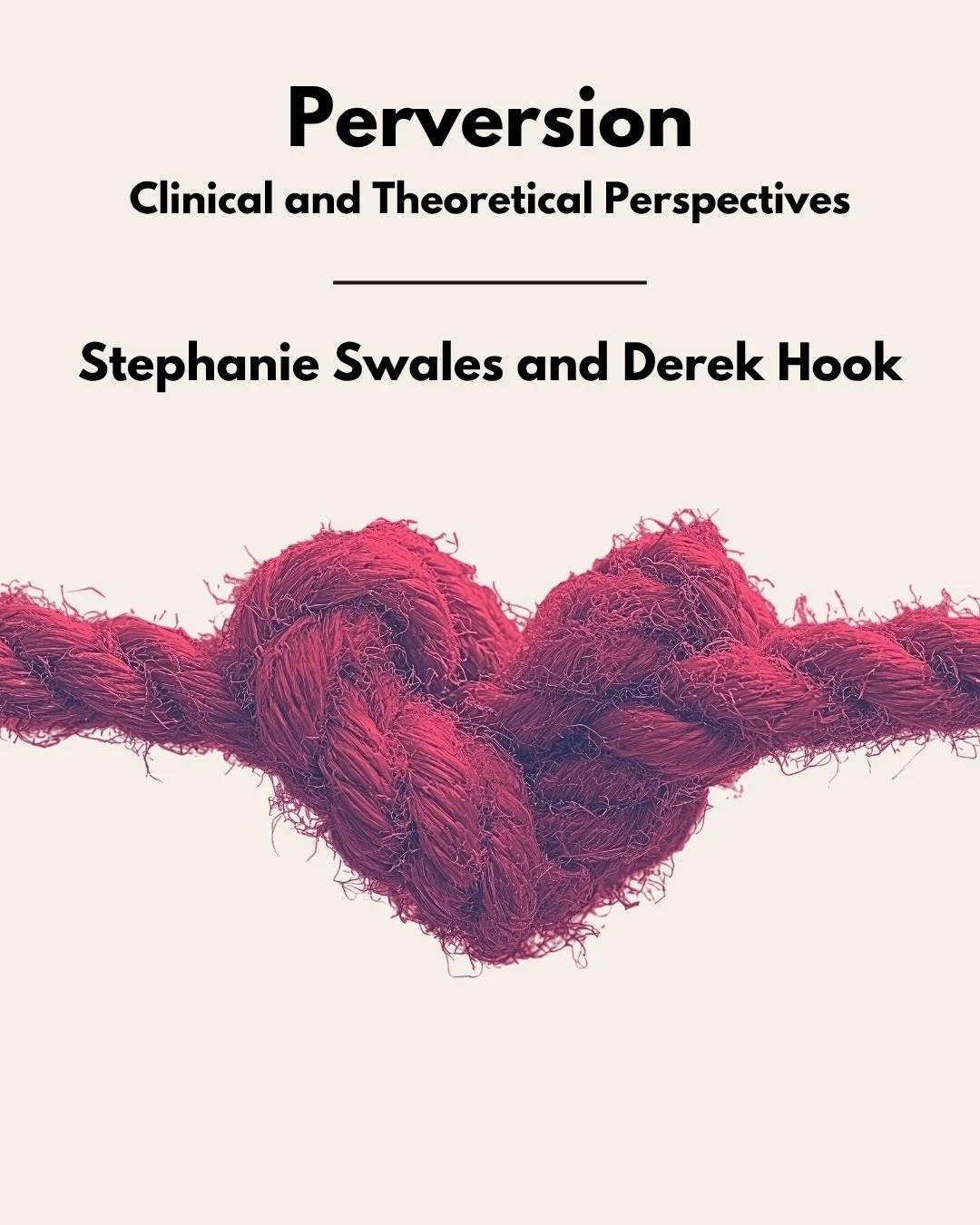 Image 2 of 2
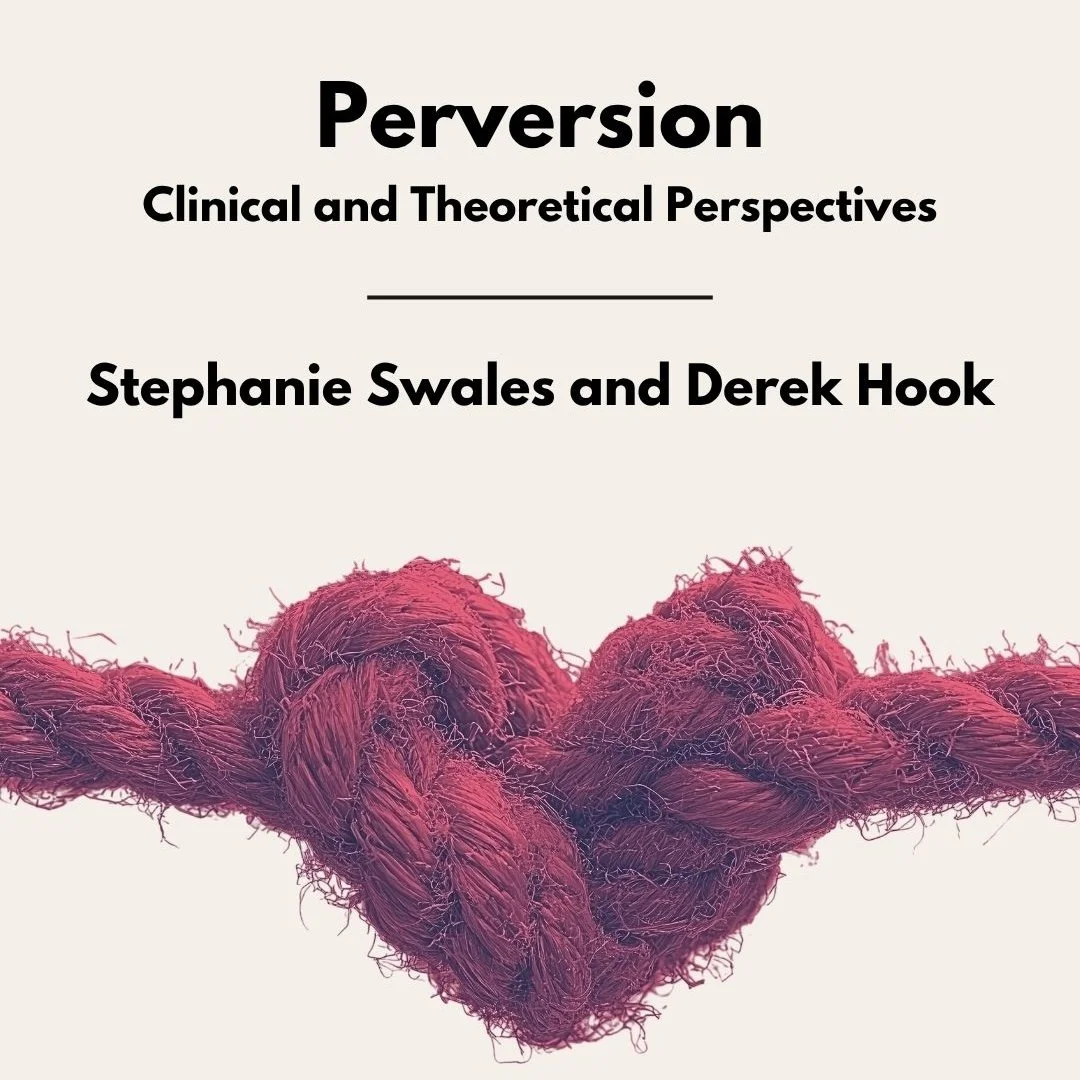
Perversion: Clinical and Theoretical Perspectives
The topic of perversion has seen a striking resurgence of interest—both within and beyond Lacanian psychoanalysis—in recent years. This is evident not only in a series of important recent publications, but also in renewed debates among clinicians over how best to conceptualise disavowal, over the social and political dimensions of perversion, over the notion of ‘ordinary perversion’, and even about whether the concept of perversion should still be used at all.
Behind these debates lie some increasingly pressing clinical questions: Are we encountering perversion more frequently today? In our supposedly ‘post-repressive’ times—when injunctions to enjoy increasingly seem to take the place of prohibitions against enjoyment—does perversion present itself differently in the consulting room?
This course returns to perversion first and foremost as a clinical structure, asking what conceptual resources Freudian and Lacanian psychoanalysis provide for recognising it, differentiating its forms, and working with it ethically in the clinic.
We begin with Freud. His work provides an indispensable set of coordinates: polymorphous perversity; neurosis as ‘the negative of a perversion’; the scopic drive; fetishism and fetishistic disavowal; and sadism/masochism. From there, we follow the decisive transformations these ideas undergo in Lacan’s work.
Particular attention will be given to disavowal. Rather than reducing it to the familiar formula of ‘I know very well, but nevertheless…’, we will return to Freud’s insistence that disavowal concerns castration, and ask what changes when this is understood in relation to law, the paternal function and the subject’s relation to the Other. This provides a route beyond treating perversion merely as a peculiar form of belief and toward grasping its distinctive subjective logic.
Another crucial reference point will be Lacan’s proposition that the perverse subject positions themselves as the object-cause of the Other’s jouissance. What does this actually mean? What is the status of the Other in the various perverse positions? Whose jouissance is at stake? In what sense does the subject become an object? And how do the gaze and the voice function as privileged libidinal objects within these arrangements?
Answering these questions will require us to work closely with a wider constellation of Lacanian concepts: object a, anxiety, alienation and separation, the gaze, the voice, law, castration and jouissance. The aim, however, is not simply to construct an elegant theory of perversion. Throughout the course, these concepts will be tested against clinical material, case examples and the problems posed by treatment itself.
Diagnostic differentiation will be a central task of the course. What distinguishes fetishism from voyeurism, sadism from masochism? Lacan breaks decisively here with any simple idea that sadism and masochism are mirror images of one another. Each involves a distinct subjective position and a different orchestration of anxiety, enjoyment and the Other.
These questions lead directly to technique. We will consider the function of scansion and the cut in interrupting circuits of symptomatic jouissance; the handling of anxiety and enjoyment in the transference; and the surprising clinical importance of shame—including the distinction between an enjoyable shame that sustains the perverse scenario and a non-enjoyable shame capable of becoming a vector of subjective transformation.
We will also examine the distinctive challenges presented by the perverse analysand’s transference. How should the clinician position themselves when knowledge itself may be recruited into the perverse scenario? How can the clinician navigate moments in which she is positioned not as a “subject supposed to know,” but as a “subject supposed to no”? How can the analyst avoid becoming a participant in a “perverse couple”—drawn into the position of witness, accomplice, judge, victim, or partner in jouissance?
Course Overview
Session 1: Freud’s conceptualizations of perversion
Sesssion 2: Structural diagnosis of perversion (1): Disavowal
Session 3: Structural diagnosis of perversion (2): Fetishism
Session 4: Masochism
Session 5: Sadism
Session 6: Exhibitionism
Session 7: Voyeurism
Session 8: The Direction of the Treatment & The Ends of Analysis with Perversely Structured Analysands
Learning Objectives
By the end of this course, participants will be able to:
Explain the structural dimension of perversion for Lacanian psychoanalysis (as opposed to a series of perverse traits).
Understand the role of disavowal as the fundamental mode of negation/defense in perversion (along with how disavowal has been conceptualised in varying ways).
Apply key Lacanian concepts—such as the Other, jouissance, and the paternal function—to illuminate fundamental aspects of perverse structure.
Differentiate between sub-structures of perversion (fetishism, sadism, masochism, voyeurism, exhibitionism).
Connect Lacanian concepts to the field of clinical practice, with particular attention to the role of perverse enactments, and how the notion of the ‘perverse couple’ applies to transference relations in the clinic of perversion.
Understand the particular role that Lacan’s notion of object a plays in perverse structure, particularly in relation to the libidinal objects of voice and gaze.
Situate the subjective structure of perversion historically (in reference to Freud’s work), ethically (in relation to the non-normalizing dimension of Lacanian psychoanalysis), and critically (in relation to current debates about the structural status of perversion).
Practical Information
This course will run for 8 sessions / 90 mins per session.
This course will run on Saturdays at 10am New York (7am LA / 3pm London / 4pm Paris).
Session dates: January 9, 16, 23, 30; February 6, 13, 20, 27, 2027.
This course will be delivered online via Zoom. Live attendance is strongly encouraged, but lectures will be recorded and available to participants who cannot attend.
Enrolment is open to all. Prior knowledge of Lacanian psychoanalytic concepts and some relevant literature may be helpful.
This course does not result in an official certification. However, a letter of acknowledgment signed by The Analytic Forum’s directors will be available upon completion of the course.
Instructors
Stephanie Swales is an Assistant Professor of Psychotherapy at Dublin City University, an Analyst of the Lacan School of Psychoanalysis, a clinical psychologist, and a clinical supervisor located in Dublin, Ireland. Her books include Psychoanalysing Ambivalence with Freud and Lacan: On and Off the Couch (2019), co-authored with Carol Owens and Perversion: A Lacanian Psychoanalytic Approach to the Subject (2012). Her next book, On Not Being Empathic, will be released by Routledge in 2027. She serves as an editor for the PCS review section of Psychoanalysis, Culture & Society and a member-at-large for the Association for Psychoanalysis, Culture & Society.
Derek Hook is a Professor of Psychology and a clinical supervisor at Duquesne University, Pittsburgh. A scholar and practitioner of psychoanalysis, he is one of the editors (along with Calum Neill) of the Palgrave Lacan Series and of the four-volume Reading Lacan's Ecrits (with Calum Neill and Stijn Vanheule). He began his analytical training in London, at the Center for Freudian Analysis and Research. He is the author of Six Moments in Lacan (2016), Fanon, Psychoanalysis and Decolonial Psychology (2025) and the co-editor of Lacan on Depression and Melancholia (2023), in addition to many papers on various facets of the clinical and cultural dimensions of Lacanian Psychoanalysis. He maintains a YouTube channel with many lectures on Lacanian psychoanalysis. He is co-director of The Analytic Forum.
Early Bird Discount available until November 30, 2026. Full price after this will be €349.
The topic of perversion has seen a striking resurgence of interest—both within and beyond Lacanian psychoanalysis—in recent years. This is evident not only in a series of important recent publications, but also in renewed debates among clinicians over how best to conceptualise disavowal, over the social and political dimensions of perversion, over the notion of ‘ordinary perversion’, and even about whether the concept of perversion should still be used at all.
Behind these debates lie some increasingly pressing clinical questions: Are we encountering perversion more frequently today? In our supposedly ‘post-repressive’ times—when injunctions to enjoy increasingly seem to take the place of prohibitions against enjoyment—does perversion present itself differently in the consulting room?
This course returns to perversion first and foremost as a clinical structure, asking what conceptual resources Freudian and Lacanian psychoanalysis provide for recognising it, differentiating its forms, and working with it ethically in the clinic.
We begin with Freud. His work provides an indispensable set of coordinates: polymorphous perversity; neurosis as ‘the negative of a perversion’; the scopic drive; fetishism and fetishistic disavowal; and sadism/masochism. From there, we follow the decisive transformations these ideas undergo in Lacan’s work.
Particular attention will be given to disavowal. Rather than reducing it to the familiar formula of ‘I know very well, but nevertheless…’, we will return to Freud’s insistence that disavowal concerns castration, and ask what changes when this is understood in relation to law, the paternal function and the subject’s relation to the Other. This provides a route beyond treating perversion merely as a peculiar form of belief and toward grasping its distinctive subjective logic.
Another crucial reference point will be Lacan’s proposition that the perverse subject positions themselves as the object-cause of the Other’s jouissance. What does this actually mean? What is the status of the Other in the various perverse positions? Whose jouissance is at stake? In what sense does the subject become an object? And how do the gaze and the voice function as privileged libidinal objects within these arrangements?
Answering these questions will require us to work closely with a wider constellation of Lacanian concepts: object a, anxiety, alienation and separation, the gaze, the voice, law, castration and jouissance. The aim, however, is not simply to construct an elegant theory of perversion. Throughout the course, these concepts will be tested against clinical material, case examples and the problems posed by treatment itself.
Diagnostic differentiation will be a central task of the course. What distinguishes fetishism from voyeurism, sadism from masochism? Lacan breaks decisively here with any simple idea that sadism and masochism are mirror images of one another. Each involves a distinct subjective position and a different orchestration of anxiety, enjoyment and the Other.
These questions lead directly to technique. We will consider the function of scansion and the cut in interrupting circuits of symptomatic jouissance; the handling of anxiety and enjoyment in the transference; and the surprising clinical importance of shame—including the distinction between an enjoyable shame that sustains the perverse scenario and a non-enjoyable shame capable of becoming a vector of subjective transformation.
We will also examine the distinctive challenges presented by the perverse analysand’s transference. How should the clinician position themselves when knowledge itself may be recruited into the perverse scenario? How can the clinician navigate moments in which she is positioned not as a “subject supposed to know,” but as a “subject supposed to no”? How can the analyst avoid becoming a participant in a “perverse couple”—drawn into the position of witness, accomplice, judge, victim, or partner in jouissance?
Course Overview
Session 1: Freud’s conceptualizations of perversion
Sesssion 2: Structural diagnosis of perversion (1): Disavowal
Session 3: Structural diagnosis of perversion (2): Fetishism
Session 4: Masochism
Session 5: Sadism
Session 6: Exhibitionism
Session 7: Voyeurism
Session 8: The Direction of the Treatment & The Ends of Analysis with Perversely Structured Analysands
Learning Objectives
By the end of this course, participants will be able to:
Explain the structural dimension of perversion for Lacanian psychoanalysis (as opposed to a series of perverse traits).
Understand the role of disavowal as the fundamental mode of negation/defense in perversion (along with how disavowal has been conceptualised in varying ways).
Apply key Lacanian concepts—such as the Other, jouissance, and the paternal function—to illuminate fundamental aspects of perverse structure.
Differentiate between sub-structures of perversion (fetishism, sadism, masochism, voyeurism, exhibitionism).
Connect Lacanian concepts to the field of clinical practice, with particular attention to the role of perverse enactments, and how the notion of the ‘perverse couple’ applies to transference relations in the clinic of perversion.
Understand the particular role that Lacan’s notion of object a plays in perverse structure, particularly in relation to the libidinal objects of voice and gaze.
Situate the subjective structure of perversion historically (in reference to Freud’s work), ethically (in relation to the non-normalizing dimension of Lacanian psychoanalysis), and critically (in relation to current debates about the structural status of perversion).
Practical Information
This course will run for 8 sessions / 90 mins per session.
This course will run on Saturdays at 10am New York (7am LA / 3pm London / 4pm Paris).
Session dates: January 9, 16, 23, 30; February 6, 13, 20, 27, 2027.
This course will be delivered online via Zoom. Live attendance is strongly encouraged, but lectures will be recorded and available to participants who cannot attend.
Enrolment is open to all. Prior knowledge of Lacanian psychoanalytic concepts and some relevant literature may be helpful.
This course does not result in an official certification. However, a letter of acknowledgment signed by The Analytic Forum’s directors will be available upon completion of the course.
Instructors
Stephanie Swales is an Assistant Professor of Psychotherapy at Dublin City University, an Analyst of the Lacan School of Psychoanalysis, a clinical psychologist, and a clinical supervisor located in Dublin, Ireland. Her books include Psychoanalysing Ambivalence with Freud and Lacan: On and Off the Couch (2019), co-authored with Carol Owens and Perversion: A Lacanian Psychoanalytic Approach to the Subject (2012). Her next book, On Not Being Empathic, will be released by Routledge in 2027. She serves as an editor for the PCS review section of Psychoanalysis, Culture & Society and a member-at-large for the Association for Psychoanalysis, Culture & Society.
Derek Hook is a Professor of Psychology and a clinical supervisor at Duquesne University, Pittsburgh. A scholar and practitioner of psychoanalysis, he is one of the editors (along with Calum Neill) of the Palgrave Lacan Series and of the four-volume Reading Lacan's Ecrits (with Calum Neill and Stijn Vanheule). He began his analytical training in London, at the Center for Freudian Analysis and Research. He is the author of Six Moments in Lacan (2016), Fanon, Psychoanalysis and Decolonial Psychology (2025) and the co-editor of Lacan on Depression and Melancholia (2023), in addition to many papers on various facets of the clinical and cultural dimensions of Lacanian Psychoanalysis. He maintains a YouTube channel with many lectures on Lacanian psychoanalysis. He is co-director of The Analytic Forum.
Early Bird Discount available until November 30, 2026. Full price after this will be €349.